
Ladino, or Judeo-Spanish, is one of the deep languages of Sephardi Izmir. It has lived in songs, sayings, family speech, newspapers, religious culture, humour, recipes and memory.
- Also called: Judeo-Spanish, Judezmo
- Roots: Old Castilian Spanish, from 1492
- Izmir variety: Oriental Ladino
- Traditional scripts: Hebrew, Rashi, Solitreo
What Ladino is
Ladino grew out of the Old Castilian Spanish that Jews spoke before their expulsion from Spain in 1492, and became a distinct Jewish language once its speakers were cut off from later changes in Spanish. In the Ottoman world it took in words from Hebrew, Aramaic, Turkish, Greek, Arabic and French. Izmir belongs to the eastern, Oriental variety, which stayed close to Castilian Spanish. Ladino was traditionally written in Hebrew letters, in Rashi script or in the cursive Solitreo, and only came to be written widely in the Latin alphabet in the twentieth century.
Ladino in Izmir today
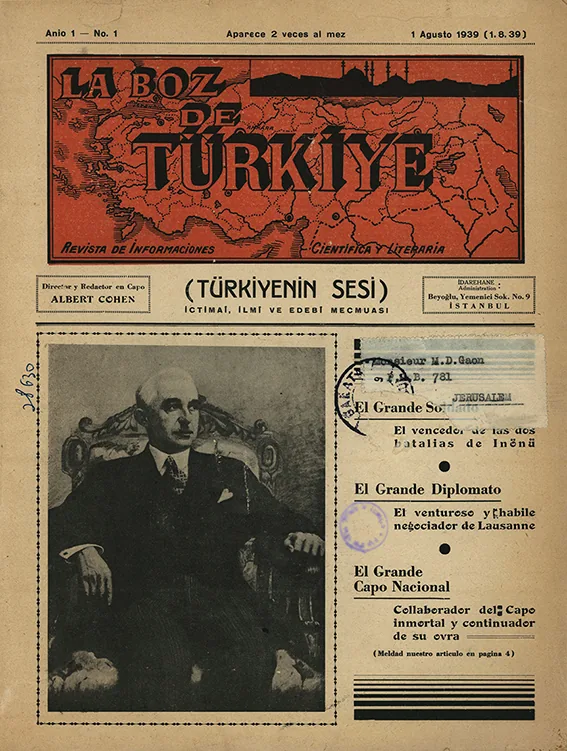
In Izmir today, Ladino is not simply a language of the past. It is also a question of transmission: who remembers it, who studies it, who sings it, who records it, and how younger generations choose to carry it. Izmir was home to an important Ladino press, and the city continues to take part in wider efforts to document and teach the language.
Learning and listening
For readers who want to go further, Web Links gathers public learning resources, dictionaries and projects, including the work of teachers such as Karen Gerson Sarhon and Rachel Amado Bortnick. Long extracts from books, dictionaries or private notes should not be published here without permission.